

Edmond Bowers, Professor, Youth Development Leadership, Clemson University, South Carolina, US
Barry A. Garst, Professor, Youth Development Leadership, Clemson University
Theresa N. Melton, Assistant Professor in Youth Development Leadership, Clemson University
Michael Vanic, Doctor of Philosophy, Clemson University
Foster, Courtney, P.H.D Student, Clemson University
Nature is a profound developmental setting across life, and the youth development field has a critical role in leveraging affordances and maximizing the potential of nature. Youth programs are uniquely situated to advance youth connection with nature while also promoting prosocial outcomes that position youth to thrive. Framed by Hamilton’s tripartite model of positive youth development, we highlight evidence-based principles and practices of impactful nature-based positive youth development programs, emphasizing the role of social interaction, direct experience, graduated nature access, escape, novelty, and outdoor leadership. These principles and practices have broad applications across formal and informal youth spaces. We discuss future directions to strengthen the theoretical underpinnings of bidirectional nature-youth developmental relations and associated practices across youth development settings.
Introduction
Community-based youth programs (CBYP) are an efficacious approach for engaging children and adolescents in developmental experiences in nature. From exposing youth to the affordances of nature [1,2], providing them with direct and indirect nature experiences [3,4], and offering opportunities for nature-based leadership and civic engagement [5∗∗, 6, 7, ∗8], CBYP offer diverse ways to expand capacities, support thriving, and build more sustainable communities. Evidence supporting nature-based CBYP has expanded considerably, from single setting studies focusing on best practices to more rigorous research designs including longitudinal studies, scoping reviews, and systematic reviews [∗8, 9, 10, 11, ∗∗12].
In this brief review, we explore nature as a developmental setting for youth programs. Hamilton’s [13] tripartite model provides a novel theoretical frame to understand nature-based positive youth development (NPYD). The tripartite model can be applied through three integrated levels: NPYD as a theory describing the process of how youth develop positively, NPYD as a philosophical framework for designing youth programs, and NPYD as reflected in examples of those programs in action. This three-level framing, when integrated through the unique setting characteristics and affordances of nature engagement, describes the impact nature can have on youth. With this model in mind, this review synthesizes contemporary literature about NPYD as a process, as a set of program design principles, and as an opportunity for real-world application across formal and informal youth settings, offering a roadmap for future NPYD research.
Nature’s role in positive youth development processes
Nature influences PYD processes by functioning as a context for development [14]. This context supports emotional, cognitive, and social development and provides other health benefits like aiding in stress and symptom reduction. Access to nature through CBYP fosters a bidirectional relationship where youth benefit from improved well-being, resilience, and social-emotional skills [23, 24, 25]. Time in nature enhances physical and mental health, fosters independence, and strengthens peer relationships. Additionally, nature provides opportunities for personal restoration, recovery, and stress reduction [4,15, 16, 17, 18] and influences how young people view themselves in relation to the natural world (i.e., identity and affinity) [19, 20, 21, 22]. As a result of nature-based experiences, youth also have opportunities to contribute to conservation efforts and often develop an affinity toward and willingness to care for natural spaces [6,19]. Additionally, their engagement with nature strengthens environmental stewardship and community connection [6,11].
One way to evaluate these mutually beneficial bidirectional relationships is to consider nature affordances. For example, natural environments offer opportunities for youth to develop and master skills, be independent, problem solve, and manage and reduce stress [26,27]. Nature experiences enhance youth cognitive performance and resilience [28] while also promoting restoration by strengthening executive function and a young person’s ability to manage everyday cognitive demands [17,26]. These impacts have also been seen with diverse populations like neurodiverse [29] and rural youth [23].
Principles of NPYD programs
The “Big 3” of PYD refer to three characteristics that mark quality youth programs: positive and sustained youth–adult relationships, skill-building activities, and opportunities for youth contribution and leadership [31]. When these PYD program resources are aligned with the cognitive, emotional, and behavioral assets of young people, then youth are positioned to thrive [31]. NPYD builds on the Big 3 by acknowledging nature as a developmental context but also by incorporating nature-specific processes and environmental affordances that foster developmental outcomes uniquely accessible through engagement with the natural world.
Positive and sustained youth–adult relationships
Alignment between the Big 3 of PYD and nature begins with relationships. The development of positive peer and adult relationships is foundational to NPYD, with nature serving as a developmental context for the cultivation of nature-based experiences that create opportunities for engagement, connection, friendship-making, and community [32,33]. Relationships are central to other outcomes within NPYD, such as resiliency [25], development of an environmental identity [34], and care for the environment [35]. Given that some youth may express apprehension, fear, or concern about spending time in nature [36,37], these relationships support youth in acclimatizing to nature as a novel context where unique and unexpected activities are often encountered [38, 48, 49, ∗∗50]. Further, positive peer and adult relationships normalize appreciation toward nature and encourage active, social experiential engagement that is key to creating effective youth development opportunities in outdoor settings [38]. Over time positive experiences in nature can build youth confidence and comfort in nature [1,4].
Youth skill-building activities
The second dimension connecting nature and the Big 3 of PYD involves opportunities for youth to build skills. While recognized as a critical component of PYD settings [32,33], building skills in nature is particularly critical for supporting youth competence and confidence. Hands-on activities like orienteering, outdoor cooking, nature study, and fire-building promote problem solving and personal responsibility [2,42,50]. Group hikes and scavenger hunts can promote communication while also promoting physical well-being [1,28,35]. Journaling in nature can promote self-reflection [42]. Building skills through NPYD is more likely during direct outdoor experiences, where youth interact with natural elements and become deeply involved in nature exploration [35,39]. When youth are immersed in nature through multi-day outdoor programs and trips, and when they experience repeated exposure to nature in terms of both breadth (i.e., number of activities) and intensity (i.e., participation frequency), and graduated access (slow exposure over time that build in the level of challenge and risk), then the impact of NPYD can be even greater [14,15,35,40,41]. Skill development in nature can lead to mastery, which builds self-efficacy and independence.
Opportunities for youth contribution and leadership
The third dimension connecting nature with the Big 3 involves offering youth meaningful leadership roles that allow them to contribute to their communities. Research supports leadership-focused NPYD as effective in building independence, problem solving, affinity for nature, and empowerment [6]. A large body of literature supports the role of childhood exposure to nature-based settings in shaping later adult interest in, and pro-environmental beliefs and behaviors toward, wild places [34,35,39, 43]. In other words, as young people spend time in nature as they age, from free play in nature in early childhood to participation in structured nature-based youth programs to nature-based leadership and involvement in conservation as adolescents, youth may become increasingly emotionally connected to nature (i.e., affinity for nature) and more likely to want to care for and protect the environment. Kellert (2012) noted the appeal of nature-based programs, such as conservation projects that allow youth to learn and practice leadership [37].
Contextual features provided by nature-based settings
Nature not only provides a developmental context for the Big 3, but it also acts as a catalyst for youth outcomes through unique processes and affordances that deepen the NPYD experience. Figure 1 highlights the distinct contextual features of nature-based settings. Practitioners should design for the Big 3 while intentionally leveraging nature’s distinct features—like getting away, fascination, awe, and novelty—to support NPYD.
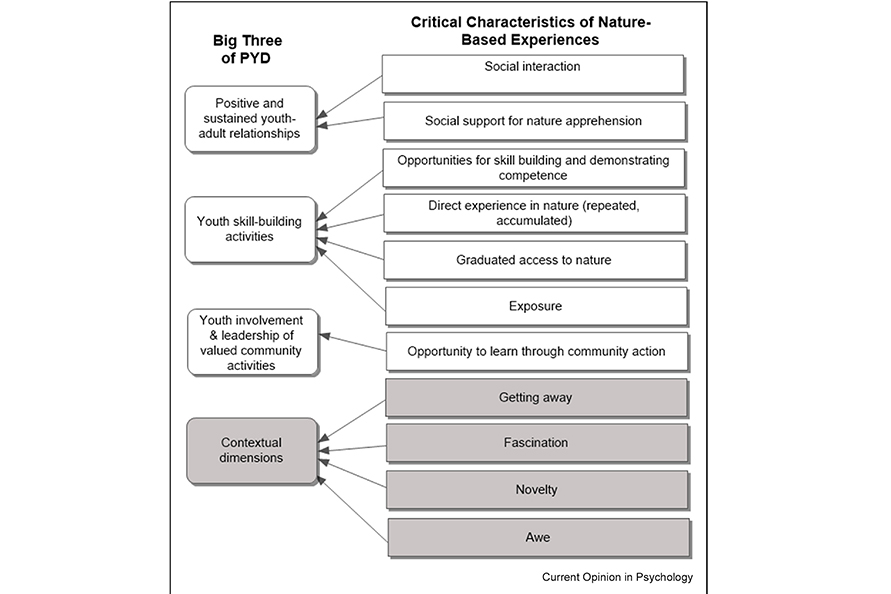
Figure 1. Aligning the Big Three of PYD and unique features of nature-based experiences.
Getting away
This characteristic, often described as escape or going to a restorative place [16], can reflect a change in setting (i.e., travel from a person’s neighborhood to a nature-based place) or a conceptual change that allows a youth to see their old setting in a new way. The concept of getting away has been identified as an important element of adolescents’ most valued outdoor places [44].
Fascination
Fascination is sensory stimulation in nature that draws a person’s attention without effort and does not require deep thinking [16,45]. Sights and sounds characterizing modern living often overwhelm our attention, so natural environments associated with a gentle, soft fascination allow the executive attentional system to replenish [15]. The benefits of soft fascination through nature may be particularly important for adolescents, whose regular use of digital technologies has risks for adolescent health and well-being [46,47].
Novelty
Novelty is a key characteristic of nature-based interventions and learning [48, 49, ∗∗50]. Scholars describe NPYD programs as experiences where “strangers come together in a strange place to do strange activities” [51]. Novelty in these nature-based settings operates across four dimensions—cognitive, geographic, psychological, and social [52]. In youth programs, novelty enhances engagement and curiosity [53]. The need for youth to adapt to unfamiliar places, social groups, and activities fosters personal growth [54].
Awe
Awe has been proposed as a profound element of nature-based experiences [2,37]. Defined as “feeling a deep emotional, spiritual, or transcendental connection to … the specialness of an experience” (p.82) [55], awe is an emotion felt when a person experiences something different from anything they have experienced before and that transcends a current frame of reference and cannot be easily understood [56]. Awe also has a social dimension encouraging youth to be curious, ask questions, and seek information from others.
Practices of NPYD programs in formal and informal settings
Youth development professionals are uniquely positioned to capitalize on the benefits of NPYD in formal and informal contexts. In formal settings, such as primary and secondary schooling, educators can teach environmental education or embed nature-based instruction into the curriculum. Informal settings, which take place outside of school, can consist of unstructured time in nature as well as participation in nature-related community events.
Formal settings provide students the opportunity to experience nature in a structured, organized way embedded in a curriculum. Formal settings can be useful in cultivating content-specific knowledge. Goodale et al. (2024) found that infusing targeted instruction on environmental stewardship education and global citizenship into curricula led to increases in students’ environmental knowledge, awareness, and attitudes [57]. Informal settings, on the other hand, provide youth with the opportunity to experience nature leisurely and on their own time, thereby cultivating non-academic outcomes such as physical development, social skills, and community involvement [30].
Schusler and Krasney (2010) found that youth environmental action programs, in both formal and informal settings, are effective at contributing to PYD [58]. These programs, which range from volunteering at a community garden to advocating for sustainable environmental practices, offer unique contributions to youth development that mirror Eccles and Gootman’s (2002) features of positive developmental settings, such as connecting students with their community, instilling psychological development skills, and providing a haven for youth to express themselves [32,58]. Unstructured time in nature is also positively correlated to the five Cs of PYD [23].
Due to the benefits of NPYD, it is imperative for youth development leaders to engage in relevant professional development. Holland et al. (2024) found that educators who participate in nature-related professional development reported increases in self-reliance and self-reflection, as well as improvements to their professional practices such as establishing a positive classroom climate [59]. With a greater understanding of how nature can advance PYD, these leaders are better positioned to take a more holistic approach to program design, as well as make decisions on incorporating nature in a way that aligns with their program mission and resources [59].
Future directions
This review reveals three future directions: (1) developing stronger theoretical foundations, (2) addressing key research gaps, and (3) exploring moderators affecting program effectiveness. First, the theoretical foundations undergirding youth and nature need further development. Existing developmental theories often overlook the unique potential of nature-based settings to promote PYD. These settings provide distinct contextual characteristics and affordances that shape the development of youth in ways that traditional frameworks rarely capture [2]. Opportunities exist to better understand the bidirectional relations between youth and nature, to address not only how nature influences youth but also how youth engage with and impact natural environments. Given that the study of the developmental potential of nature for youth has been an interdisciplinary exercise, frameworks from psychology, environmental science, public health, and other disciplines will continue to inform inquiry.
Second, many gaps remain in research on long-term impacts of nature engagement on youth, highlighting the need for longitudinal studies that evaluate outcomes attributed to nature-based youth program participation over time. Much of the existing research does not adequately represent diverse youth populations or consider the role of culturally relevant practices in shaping experiences with nature [60]. Additionally, critical questions about access to nature challenge program providers to ensure that all youth have access to the outdoors [61]. Parents and non-parental adults play a crucial role in reinforcing and modeling nature engagement, yet their influence is underexplored [1,62]. Understanding how family and community involvement supports youth participation in direct and indirect experiences in nature-based youth programs can strengthen future interventions. Young people’s experiences in nature cannot be understood separately from their families, cultures, and histories.
Third, the implementation of NPYD programs remains a black box that requires closer examination to better understand what moderators produce intended outcomes [63,64]. Key questions include how much of a program is necessary to achieve the desired effect, when and for whom are program adaptations most impactful, and under what conditions is time in nature most therapeutic [17,65]. Further, scaling nature-based youth development programs requires examining factors such as accessibility, equity, and sustainability across community contexts [66,67]. Some nature-based settings may offer richer nature affordances than others, raising questions about how this variability impacts developmental outcomes [2,63]. Future research should identify which nature-based characteristics are most critical for fostering youth well-being and how programs can be adapted or expanded to ensure youth access to these benefits.
Conclusion
Nature is a powerful developmental setting that fosters positive youth outcomes by providing the support and opportunities associated with the Big 3 of PYD, coupled with unique characteristics and affordances of the outdoors. Applying Hamilton’s tripartite model, this paper conceptualized NPYD as a developmental process, a program design philosophy, and an applied practice. Key insights in this review highlight how nature supports skill-building, peer relationships, resilience, restoration, and health through both formal and informal opportunities. Program providers can leverage nature by integrating novel, sustained, and developmentally appropriate experiences that promote social connections, independence, competence, affinity for nature, and opportunities for youth to contribute to their communities. To maximize program impact, practitioners and researchers must collaborate to advance the evidence supporting NPYD, refine programs based on that evidence, and expand program access to better serve all youth and families.
This article is republished from Science Direct under a Creative Commons license. Read the original article.
Main photo from Freepik.
Charles Telfair Centre is an independent, nonpartisan not for profit organisation and does not take specific positions. All views, positions, and conclusions expressed in our publications are solely those of the author(s).