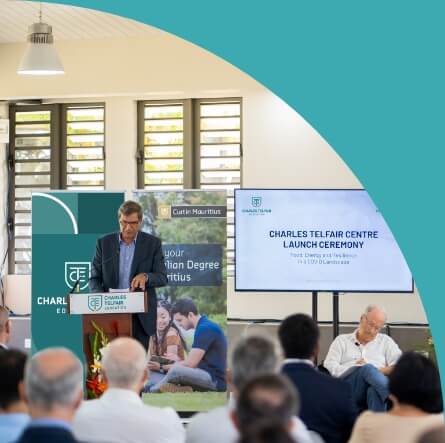


Ali Mansoor, Former Financial Secretary of Mauritius and former Assistant Director at the IMF
Setting the Context
Europe
The negative consequences of Brexit have demonstrated the risks of leaving the European Union (EU). Economic disruptions, trade complications, and political fragmentation have served as a deterrent against similar moves by other far-right movements in Europe. Similarly, the “America First” policies under the Trump administration strained transatlantic relations, undermining trust in nationalist economic policies. As Churchill once noted, “democracy is the worst form of Government except all those other forms that have been tried from time to time “. In this context, the survival and strengthening of liberal democracy in Europe are critical to countering the growing threat of digital feudalism.
To maintain stability and economic competitiveness, Europe needs to secure diversified supply chains, particularly for energy and food security. The more nations engage in sustaining globalization, the greater the ability of liberal democracy to compete with digital feudalism, much like it once did with Soviet communism (Fukuyama 2022). Africa, along with Canada, Australia, New Zealand, India, and possibly China, is a natural partner in this effort.
Africa
Since gaining independence, Sub-Saharan Africa (SSA) has struggled with economic convergence. In the 1960s, SSA’s per capita GDP was nearly six times that of China, yet by 2010–2019, it had fallen to just 16% of China’s level, further decreasing to 14% by 2023. While 45% of countries classified as Low-Income Developing Countries (LIDCs) in the 1960s have since advanced to upper-middle-income status, SSA remains dominant in the LIDC category, with 39 out of 54 nations still classified as such. At an annual per capita income growth rate of 3%, SSA would take 24 years just to reach half of China’s 2015 per capita GDP.
This stagnation has profound implications: economic underperformance drives social instability, migration crises, and geopolitical tensions, particularly affecting Europe. Although some SSA nations—such as Botswana, Mauritius, and Seychelles—have achieved meaningful income convergence, others, including Burkina Faso, Mozambique, and Rwanda, remain far behind. Additionally, SSA’s population is projected to grow by one billion by 2050, potentially making it a global economic force or a source of mass instability.
Call to Action
The shifting global economic landscape, particularly China’s rising labor costs and trade tensions with the West, presents an opportunity for SSA and Mauritius to attract industries relocating from China. Vietnam has emerged as the primary beneficiary of this shift, receiving $4.73 billion in Chinese investment in 2024 alone. Mauritius, leveraging its business-friendly environment, can collaborate with SSA partners to secure a share of this investment and position itself as a regional hub akin to Singapore in Southeast Asia.
To capitalize on these opportunities, SSA must address several structural challenges:
- Urbanization: If managed strategically, rapid urban growth in SSA can become a powerful engine of productivity, innovation, and rising consumption. Compact, connected, and efficient cities can reduce transaction costs, stimulate formal employment, and attract investment, unlocking the agglomeration benefits critical for structural transformation.
- Technological Change and FDI: Foreign Direct Investment (FDI) in physical assets remains vital to accelerating technological adoption and infrastructure development across SSA. Beyond capital, FDI brings know-how, standards, and access to global value chains, elements essential to shifting economies from factor-driven growth to innovation-led development.
- Transborder Transport Infrastructure and Services: Poor regional transport and logistics systems continue to fragment African markets and isolate landlocked countries. The Lighthouses of Government proposal offers a platform to pilot integrated, cross-border infrastructure and services—combining world-class logistics, harmonized regulations, and efficient customs operations. These zones can become models for reducing trade costs, connecting African economies, and catalyzing the scale required for structural transformation.
- Demographic Transition: By 2050, SSA’s labor force will surpass 1.1 billion people. This demographic shift represents both a risk and an opportunity. Without urgent investments in education, skills, and industrial policy, the continent risks widespread unemployment and social instability. With the right reforms, however, this workforce could become SSA’s greatest comparative advantage.
With the right economic and social policies, SSA’s demographic expansion could mirror Asia’s economic success. However, failure to act will heighten instability and migration pressures. International partners, including Europe and Japan, must collaborate with African nations to transform this potential into reality (Easterly 2002;).
Proposed Approach
Building on existing initiatives such as the G20 Compact with Africa and the World Bank’s Chief Economists of Government (CEoG) Initiative, SSA can achieve economic transformation through:
Peer Learning and Pressure: Annual policy forums over five years to refine and implement reforms effectively. Building on existing initiatives such as the G20 Compact with Africa and the World Bank’s Chief Economists of Government (CEoG) Initiative, SSA can achieve economic transformation through:
- Knowledge Sharing: Learning from successful economies to build policy capacity and attract FDI.
- Lighthouses of Good Economic Governance: Establishing high-performance zones with best-in-class business environments to accelerate industrialization.
- Utilization of the G20 Compact with Africa: Leveraging country teams to implement reforms with international support.
- Peer Learning and Pressure: Annual policy forums over five years to refine and implement reforms effectively.
Key Proposal: Demonstration Cities and Economic Governance Zones
SSA must establish Lighthouses of Good Economic Governance, which are large-scale economic zones designed to attract investment and serve as growth catalysts along the lines of the Mauritius and China experience. These cities should:
- Offer world-class infrastructure and business environments.
- Act as industrial and trade hubs linking Africa to global supply chains.
- Demonstrate strong commitments to economic reforms and the rule of law.
Implementation Strategy
- Institutional Development: Strengthening governance by fostering transparent, accountable institutions. The zones would have their own economic governance under legislation that could be modelled on Senegal. In Senegal the governance of the zone is advisory and for the zones to be credible they would need to have the same executive power as the Hong Kong executive has under “One country, two systems”.
- Private Investment & Public-Private Partnerships: Attracting capital to develop world-class infrastructure and services. A rapidly growing city that links the African hinterland to the global economy would have several tax levers under its own economic governance. It could use property taxes, income tax and value added tax for a growing tax base that would support borrowing for public infrastructure. In addition, there would be scope for private investment and Private Public Partnerships to invest in housing, commercial, industrial and transport facilities including a port and airport.
- Strategic Partnerships: Collaborating with international financial institutions and high-income economies. High Income Development partners and the international financial institutions can provide both capital and technical assistance to set up transparent procurement, a credible legal system for commercial disputes, education and health facilities, sound environmental legislation, efficient public transport systems, regulatory frameworks for private provision of electricity, water and possibly natural gas.
- Knowledge Exchange: Learning from successful economies like China, Dubai, Mauritius, and Singapore. A peer learning program between zones could be set up to learn and support each other as well as drawing on peers in Mauritius, China and other successful zones.
- Targeted Model Cities: Establishing pilot zones that generate spillover benefits across SSA. At least one zone needs to be set up to have a demonstration effect. Over time 10 to 20 major cities could be expected to emerge as more countries see the benefits.
Expected Outcomes
Short-term:
In the short term, progress can be gauged by the extent of consensus achieved among governments, investors, and development partners on priority reforms and their implementation.
A critical milestone will be the adoption of enabling legislation—like Senegal’s model but adapted to vest full authority in the zone’s Governing Entity. This entity should include representatives from the host government, zone investors, workers, and local civil society, ensuring broad-based legitimacy and accountability.
Another key milestone would be the adoption by the Governing Entity of a Strategic Implementation Plan to guide the development of the Zone and serve as a replicable model for similar zones across Africa.
Long-term:
Over the long term, the Lighthouses of Government initiative has the potential to transform national development trajectories by anchoring reform in concrete, high-performing zones. These zones can serve as catalysts for broader institutional change, fostering strong, accountable institutions that underpin economic stability and good governance.
As these lighthouses mature, they will drive integration into global trade and supply chains, positioning their host countries as competitive players in regional and international markets. By modeling best practices in regulation, service delivery, and infrastructure, they will attract investment and reduce the friction that often deters business growth.
A cornerstone of this vision is sustainable infrastructure development—not only to meet the economic needs of firms operating within the zones, but also to serve the surrounding communities. Roads, energy, water, and digital networks will be built with long-term resilience in mind, enhancing both economic performance and social inclusion.
Most importantly, the zones will create meaningful employment opportunities, particularly for youth and marginalized populations. This will help reduce social tensions, strengthen communities, and mitigate the pressures that drive irregular migration. Over time, the zones will become beacons of inclusive growth, proving that with the right governance, even the most complex development challenges can be tackled and overcome.
By adopting this strategic approach, SSA can overcome economic stagnation, institutional weaknesses, and migration crises. Mauritius, in particular, has the potential to emerge as Africa’s premier business hub, akin to Singapore and Dubai. However, time is of the essence—failure to act swiftly may result in missed opportunities in the rapidly evolving global landscape.
Main photo by Pixabay
Charles Telfair Centre is an independent, nonpartisan not for profit organisation and does not take specific positions. All views, positions, and conclusions expressed in our publications are solely those of the author(s).